Managing your business finances doesn’t have to feel complicated but choosing the right accounting software can make or break your workflow. 💼
Both Xero and MYOB are powerful tools used by businesses worldwide, but they’re built for different needs. One focuses on modern, easy-to-use cloud accounting with strong integrations, while the other is known for robust payroll and traditional accounting features.
So the real question is:
👉 Which one actually fits your business better and gives you more value for your money?
In this guide, we’ll break down everything step-by-step pricing, features, ease of use, and real use cases so you can confidently pick the right software without confusion. 🚀
⚡ Quick Comparison: Xero vs MYOB (Key Differences in Short)
| Feature | Xero | MYOB |
|---|---|---|
| Market Share (AU) | 60%+ | 20-25% |
| Starting Price | $5.80/month (first 3 months, 80% off) | $24/year for Solo mobile app |
| Payroll | Included in plans, but limited employees on lower tiers | Unlimited payroll on Pro and higher plans |
| Bank Reconciliation | Highly automated, AI-powered matching | Reliable but less automated |
| Multi-Currency | Available on higher plans | Only on AccountRight Premier |
| User Limits | Unlimited users on all plans | Varies by plan (Solo: 1 user; others: unlimited) |
| Best For | Startups, scalability, global ambitions | Australian payroll, local compliance |
🧾 What Is Xero? (Overview + Best Use Cases)
Xero is a cloud-native accounting software platform that has become a favourite among Australian startups and SMEs. It’s entirely cloud-based, meaning you can access your financials from anywhere, on any device. Xero’s strengths lie in its intuitive interface, powerful automation, and seamless app integrations.
Key features include:
- Unlimited users on all plans
- Automatic bank feeds and smart reconciliation
- Real-time reporting and dashboards
- STP-compliant payroll and superannuation automation
- 1,000+ third-party app integrations
Best use cases for Xero:
- 🚀 Startups and growing businesses needing scalability
- 👨💼 Service-based businesses (consultants, agencies, freelancers)
- 🌍 Businesses with global ambitions (multi-currency support)
- 🔗 Teams that rely on many third-party apps (CRM, POS, e-commerce)
📊 What Is MYOB? (Overview + Best Use Cases)
MYOB has been a trusted name in Australian accounting for over 30 years. In 2026, MYOB has consolidated its offerings into a single platform: MYOB Business, replacing the old Essentials and AccountRight lines. MYOB now offers a range of plans from a mobile-only Solo app for sole traders up to AccountRight Premier for multi-currency, multi-location businesses.
Key features include:
- In-built AI features across all plans
- Unlimited payroll on Pro and higher plans
- Strong inventory management
- Industry-specific versions (retail, construction)
- Advanced reporting and analytics
Best use cases for MYOB:
- 🇦🇺 Australian businesses prioritizing payroll and STP compliance
- 📦 Product-based businesses needing strong inventory management
- 🏢 Established businesses with complex payroll needs
- 👥 Businesses that prefer phone support
💰 Pricing Comparison: Xero vs MYOB (Plans, Costs & Value)
Xero Pricing (Australian Plans)
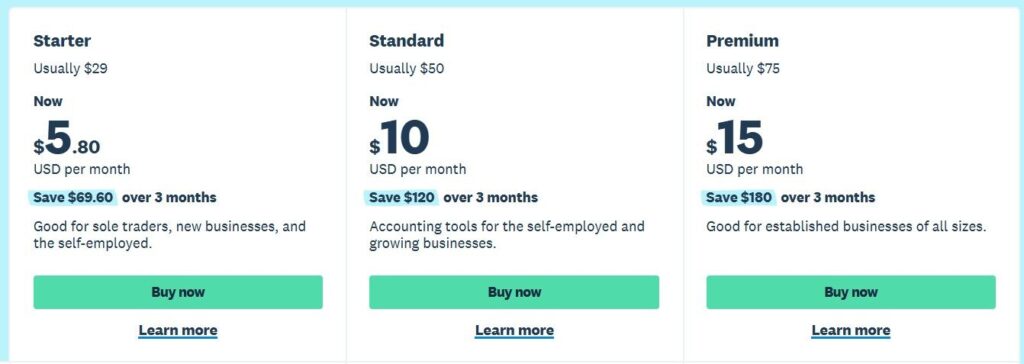
Xero offers four main plans with an 80% discount for the first 3 months for new customers:
| Plan | Regular Price | Discounted Price (First 3 Months) | Key Features |
|---|---|---|---|
| Ignite | $25 AUD/month | $5.80 AUD/month | Invoice limits apply, bank reconciliation |
| Grow | $75 AUD/month | $15 AUD/month | Unlimited invoices, auto-reconcile Beta |
| Comprehensive | $100 AUD/month | $20 AUD/month | 90-day forecasts, expense claims |
| Ultimate | $130 AUD/month | $26 AUD/month | 180-day forecasts, advanced analytics |
Additional users are $5–$7 per month depending on the plan. Payroll, Expenses, and Projects may have extra charges if usage exceeds included limits.
MYOB Pricing (Australian Plans)
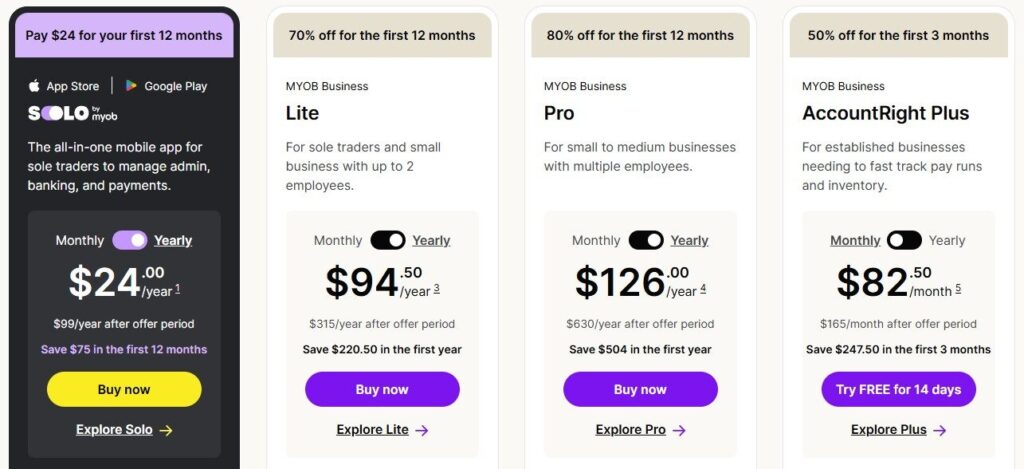
MYOB has five main plans, with significant discounts for the first year on some plans:
| Plan | Price (First Year) | Regular Price | Key Features |
|---|---|---|---|
| Solo | $24/year | $99/year | Mobile-only, 1 user, unlimited invoices |
| Lite | $94.50/year | $315/year | Web-based, 2 employees, payroll extra |
| Pro | $126/year | $630/year | Unlimited employees, unlimited bank accounts |
| AccountRight Plus | $82.50/month | $165/month | Unlimited inventory, priority support |
| AccountRight Premier | Custom pricing | Custom pricing | Multi-currency, multi-location |
Value Verdict:
- For sole traders on a budget → MYOB Solo ($24/year) is unbeatable.
- For growing businesses needing unlimited users → Xero Ignite at $5.80/month (first 3 months) is incredibly affordable.
- For payroll-heavy businesses → MYOB Pro offers unlimited payroll at a lower entry price than Xero’s premium plans.
🧑💻 Ease of Use & User Experience
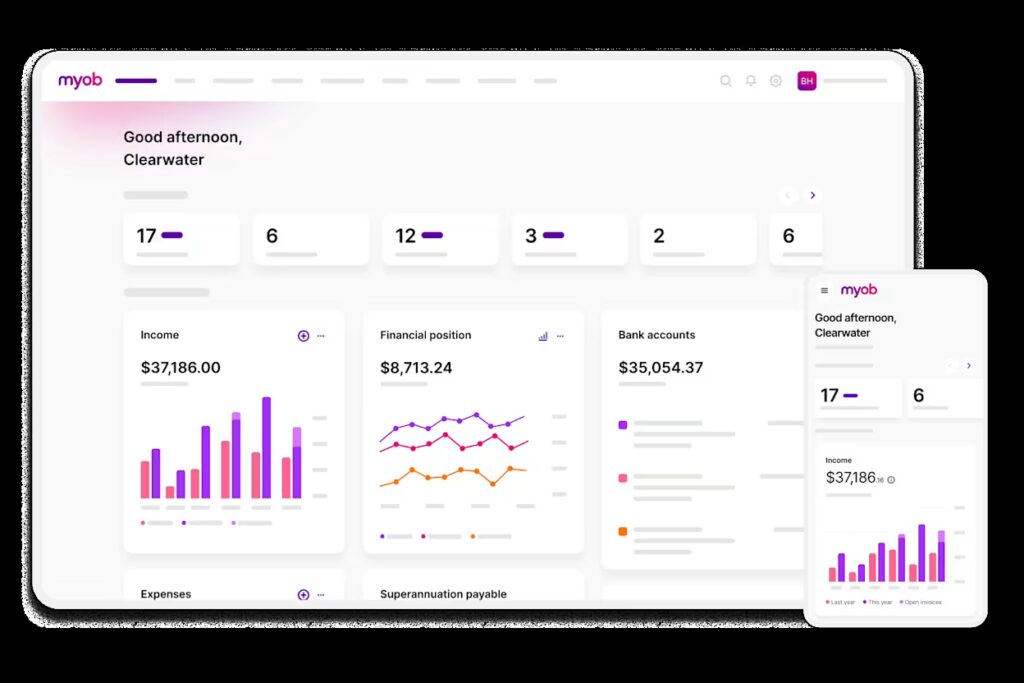
Xero is widely regarded as the more beginner-friendly platform. Its clean, modern interface and intuitive dashboard make it easy for non-accountants to navigate. The dashboard puts cash flow, invoices, bills, and bank balances front and center.
Xero’s user satisfaction rating is high, with 87% of users satisfied based on over 4,600 reviews.
MYOB has historically had a steeper learning curve, particularly for its desktop-based AccountRight products. However, the new MYOB Business web-based plans (Lite and Pro) are much more modern and user-friendly.
Some users still find MYOB’s interface more feature-dense and less intuitive than Xero’s.
Winner: Xero for absolute beginners and non-accountants; MYOB is catching up but still feels more “accountant-centric.”
📈 Features Comparison: Xero vs MYOB (Core Accounting Tools)
Both platforms cover the essentials, but there are key differences in depth.
| Feature | Xero | MYOB |
|---|---|---|
| Invoicing | Unlimited on Grow+, custom templates, online payments | Unlimited, customisable, Tap to Pay on Solo |
| Bank Reconciliation | Highly automated, AI-powered, daily feeds | Reliable, but less automated than Xero |
| Inventory | Basic (finished goods tracking) | Advanced (SKUs, purchase orders, stocktake) |
| Reporting | Real-time dashboards, AI analytics | Advanced reporting, industry-specific templates |
| Multi-currency | Available on Comprehensive+ | Only on AccountRight Premier |
Winner: Xero for automation and ease of use; MYOB for inventory depth.
🧾 Invoicing & Billing (Automation, Recurring Invoices, Payments)
Xero Invoicing: Xero allows you to create and send professional invoices from the web or mobile app. It supports online invoice payments via Stripe, automatic payment reminders, and recurring invoices. The mobile app allows you to create invoices on the go.
MYOB Invoicing: MYOB offers customisable invoices with open/read tracking. The Solo mobile app includes Tap to Pay, allowing sole traders to accept in-person payments directly from their phone ($0.30 + 1.6% per transaction). MYOB also supports recurring invoices and online payment gateways.
Winner: Xero for automation and mobile flexibility; MYOB for in-person payment features (Tap to Pay).
💸 Expense Tracking & Bank Reconciliation (Automation vs Manual Work)
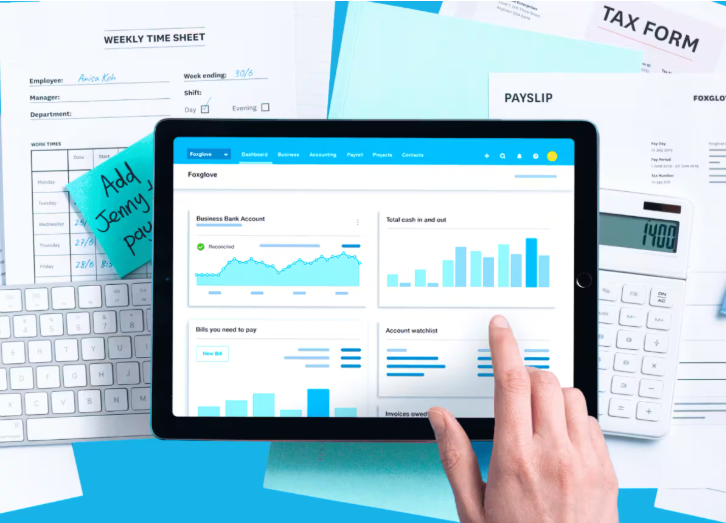
Xero’s Approach: Xero is renowned for its live bank feeds and clean reconciliation screen. It pulls in transactions daily, and with bank rules and smart matching, reconciling takes minutes. Xero has introduced AI features that can automate up to 90% of routine reconciliation tasks, flagging exceptions for review. This saves significant time for busy business owners.
MYOB’s Approach: MYOB also offers bank feeds, but users report that the reconciliation process is slightly less automated than Xero’s. MYOB has been cautiously upgrading existing workflows like receipt capture and transaction categorisation with AI, but it’s not as advanced as Xero’s reconciliation engine yet.
Winner: Xero (faster, more automated, AI-powered).
📊 Reporting & Financial Insights
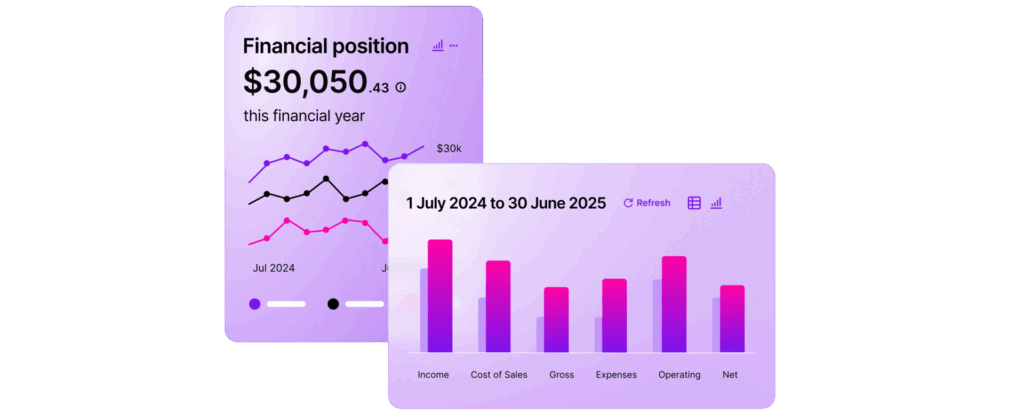
Xero Reporting: Xero provides real-time dashboards, profit and loss statements, balance sheets, and cash flow reports. Recent updates have introduced AI-powered analytics that generate written insights from financial data, helping you understand your business performance at a glance.
MYOB Reporting: MYOB offers advanced reporting and analytics, including industry-specific templates (retail, construction). The new Client Accounting module uses AI-assisted account mapping to reduce manual work and improve compliance workflows. MYOB’s reporting is robust but can feel more complex to navigate.
Winner: Xero for user-friendly, AI-driven insights; MYOB for industry-specific depth.
🧾 Payroll & Employee Management (Key MYOB Advantage?)
👉 MYOB is known for strong payroll features, especially for larger teams.
MYOB Payroll: MYOB Business Pro includes unlimited payroll at no extra cost, with Single Touch Payroll (STP Phase 2) compliance, automatic superannuation calculations, and Payday Super readiness (from July 2026). Many bookkeepers find MYOB’s payroll more intuitive for award interpretation and complex pay runs. MYOB also offers a standalone Payroll Only plan for businesses that don’t need full accounting.
Xero Payroll: Xero includes payroll in its plans, but the number of employees you can pay is limited on lower tiers. Xero’s payroll is functional and has improved substantially, automating superannuation, PAYG, and STP reporting. However, for larger teams (5+ employees), you’ll need a higher-tier Xero plan.
Winner: MYOB (unlimited payroll on Pro, stronger award interpretation).
🌍 Multi-Currency & Global Support (Xero Advantage?)
👉 Xero offers extensive integrations and scalability for growing businesses.
Xero Multi-Currency: Xero offers multi-currency support on its Comprehensive and Ultimate plans. You can send invoices in foreign currencies, track exchange rate gains/losses, and manage international suppliers. This makes Xero a strong choice for businesses with global ambitions.
MYOB Multi-Currency: MYOB only offers multi-currency support on its highest-tier AccountRight Premier plan. For most small businesses, this feature is locked behind a significant paywall.
Winner: Xero (more accessible multi-currency on mid-tier plans).

🔗 Integrations & Add-Ons (App Ecosystem Comparison)
👉 Xero offers extensive integrations and scalability for growing businesses.
Xero Integrations: Xero boasts a vast, self-service app marketplace with over 1,000 third-party integrations, including CRM, POS, e-commerce, project management, and payroll add-ons. This “open ecosystem” approach makes it easy to connect a wide array of cloud tools as your business grows.
MYOB Integrations: MYOB has a smaller integration ecosystem. While it connects to many popular CRMs and payment gateways, the selection is more limited. However, MYOB offers strong native integrations within its own ecosystem (MYOB CRM, MYOB Inventory) and supports API connections for custom integrations.
Winner: Xero (1,000+ apps vs MYOB’s more limited selection).
📱 Mobile App & Accessibility
Xero Mobile App: Xero’s mobile app is consistently rated as one of the best in accounting software. It offers full invoicing, expense capture, bank reconciliation, offline capabilities, and real-time cash flow insights. You can manage your entire business finances from your phone.
MYOB Mobile App: MYOB’s mobile experience is more fragmented. There’s the Solo app (for sole traders), the MYOB Assist companion app (for receipt capture and basic invoicing), and the full MYOB Business web interface. Users report that MYOB’s mobile experience feels less polished than Xero’s, with limited reporting and an internet connection required for most features.
Winner: Xero (superior mobile experience).
🔐 Security & Data Protection
Xero Security: Xero uses bank-grade encryption for data in transit and at rest. Multi-factor authentication (MFA) is required for all logins, significantly reducing unauthorized access risk. Data is replicated across multiple secure data centers with daily backups.
MYOB Security: MYOB also uses industry-standard encryption and MFA. As an Australian company, MYOB is subject to strict local data protection regulations. However, Xero’s security posture is generally considered more transparent and audited.
Winner: Xero (slightly stronger security reputation).
👥 Multi-User Access & Collaboration
👉 Xero allows unlimited users on most plans, while MYOB may limit users on lower tiers.
Xero Multi-User: Xero includes unlimited users on all plans. You can add your accountant, bookkeeper, and employees at no extra cost. This is a major advantage for growing teams.
MYOB Multi-User: MYOB’s user limits vary by plan:
- Solo: 1 user
- Lite: Unlimited users
- Pro: Unlimited users
- AccountRight Plus: Unlimited users
While MYOB offers unlimited users on most web-based plans, the Solo plan (mobile-only) is restricted to a single user.
Winner: Xero (unlimited users on all plans, including entry-level).

🏢 Scalability (Small Business vs Growing Companies)
Xero is built to scale. From a sole trader to a multi-entity enterprise, Xero’s unlimited users, extensive app marketplace, and growing AI capabilities support businesses as they expand. Xero’s cloud-native architecture means you never outgrow the platform.
MYOB is also scalable but follows a more structured path. The new MYOB Business platform was designed to eliminate the old pain point of migrating from Essentials to AccountRight. Now, you can start on Solo or Lite and upgrade seamlessly to Pro or AccountRight Plus without changing platforms.
Winner: Xero for open-ended scalability; MYOB for structured, predictable scaling within the Australian market.
🤝 Customer Support & Help Resources
Xero Support: Xero offers 24/7 online support via email, help center, and callback requests. However, there is no inbound phone number for general support. Response times are typically within 24 hours. Xero’s customer support is rated 4.0/5 in comparisons.
MYOB Support: MYOB offers multiple support channels: phone, email, live chat, and an extensive knowledge base. Users report that with MYOB, you can get someone on the phone within a few minutes, whereas Xero requires you to use their knowledge base and then post a request for help. MYOB’s customer support is rated 3.4/5.
Winner: MYOB (direct phone support is a major advantage for urgent issues).

🔄 Free Trial, Refund Policy & Hidden Costs
Xero:
- ✅ 30-day free trial (no credit card required)
- ✅ 80% off first 3 months for new customers
- ✅ Cancel anytime with one month’s notice
- ⚠️ Invoice limits apply on Ignite plan (both approving and sending)
- ⚠️ Additional charges for payroll, expenses, projects if usage exceeds limits
MYOB:
- ✅ 14-day free trial for AccountRight Plus and Premier
- ✅ 70-80% off first year for Lite and Pro plans
- ✅ Cancel anytime
- ⚠️ Payroll is an extra $3/month per employee on Lite and Pro plans (not included in base price)
- ⚠️ Unlimited inventory is an extra $22/month on some plans
- ⚠️ Solo plan cannot be upgraded to other plans
Winner: Xero for longer trial and simpler add-on structure; MYOB for deep first-year discounts but watch for hidden add-on costs.
👤 Who Should Use Xero vs MYOB? (Best For…)
Who Should Use Xero?
- 🚀 Startups and growing businesses that need unlimited users
- 👨💼 Service-based businesses (consultants, agencies, freelancers)
- 🌍 Businesses with global ambitions (multi-currency, international clients)
- 🔗 Teams that rely on many third-party apps (CRM, POS, e-commerce)
- 📱 Mobile-first business owners who need a superior mobile app
- 💼 Businesses that prefer email/chat support over phone
Who Should Use MYOB?
- 🇦🇺 Australian businesses prioritizing payroll and STP compliance
- 📦 Product-based businesses needing strong inventory management
- 🏢 Established businesses with complex payroll needs (unlimited employees)
- 👥 Businesses that value direct phone support
- 🧾 Sole traders who want a cheap mobile-only solution (Solo at $24/year)
- 🏗️ Industry-specific businesses (retail, construction with tailored versions)

⚖️ Pros and Cons: Xero vs MYOB
Xero Pros and Cons
| Pros | Cons |
|---|---|
| ✅ Unlimited users on all plans | ❌ No inbound phone support |
| ✅ Superior mobile app | ❌ Payroll limited on lower tiers |
| ✅ 1,000+ third-party integrations | ❌ Inventory management is basic |
| ✅ Clean, intuitive interface | ❌ Multi-currency only on higher plans |
| ✅ AI-powered bank reconciliation | ❌ Higher base price after discount period |
| ✅ 30-day free trial | ❌ Invoice limits on Ignite plan |
MYOB Pros and Cons
| Pros | Cons |
|---|---|
| ✅ Unlimited payroll on Pro plan | ❌ Solo plan is mobile-only (1 user) |
| ✅ Phone support available | ❌ Mobile app less polished than Xero |
| ✅ Strong inventory management | ❌ Payroll costs extra on Lite/Pro |
| ✅ Industry-specific versions | ❌ Smaller integration ecosystem |
| ✅ Deep Australian compliance expertise | ❌ Steeper learning curve for AccountRight |
| ✅ Very cheap entry point (Solo at $24/year) | ❌ Hidden add-on costs (inventory, payroll) |
🏁 Final Verdict: Xero vs MYOB – Which One Wins?
There is no single winner. The right choice depends on your business type, size, and priorities.
Choose Xero if you:
- Are a startup or growing business needing unlimited users
- Value a superior mobile app and modern interface
- Rely on many third-party app integrations
- Have global ambitions (multi-currency)
- Prefer email/chat support over phone
Choose MYOB if you:
- Have complex payroll needs with many employees
- Run a product-based business with inventory requirements
- Value direct phone support for urgent issues
- Want a very cheap entry point (Solo at $24/year)
- Prefer an Australian company with deep local compliance expertise

The smart strategy: If you’re a sole trader or freelancer on a tight budget, start with MYOB Solo ($24/year). If you’re a growing service-based business with a team and an accountant, Xero is the safer bet for most small businesses in 2026. If you have complex payroll and inventory needs, MYOB Pro or AccountRight Plus is the better choice.
Related Articles:-
Xero vs QuickBooks? Don’t Choose Until You Read This!
Xero vs Zoho Books: Which Is Better for Your Business?
❓ FAQs
1. Is Xero better than MYOB?
It depends. Xero is better for startups, mobile users, and businesses needing extensive integrations. MYOB wins for complex payroll and inventory management.
2. Which is cheaper, Xero or MYOB?
MYOB has a cheaper entry point (Solo at $24/year). Xero’s discounted Ignite plan is $5.80/month for 3 months, then $25/month.
3. Does Xero have phone support?
No. Xero does not offer inbound phone support. Support is via email, help center, and callback requests.
4. Does MYOB have unlimited payroll?
Yes. MYOB Business Pro and AccountRight Plus include unlimited payroll at no extra cost.
5. Which has better bank reconciliation?
Xero. Its AI-powered reconciliation is faster and more automated than MYOB’s.

I’m a CRM and Xero expert with over 6 years of experience. I specialize in researching, testing, and simplifying complex systems like Xero and other CRM tools. From setting up workflows to writing easy-to-understand content, I help businesses choose the right platforms and use them better for real growth.